
Han Otten - What about microtonality and co-composing in film music?

We watch a scene from the feature film Marionette and Han tells us about the use of microtonality in film music and how this affects the perception of the audience. Alexa introduces co-composer Maurits Overdulve and Han and Maurits discuss their collaboration for Marionette: how do you divide the work that has to be done?
More with Han Otten
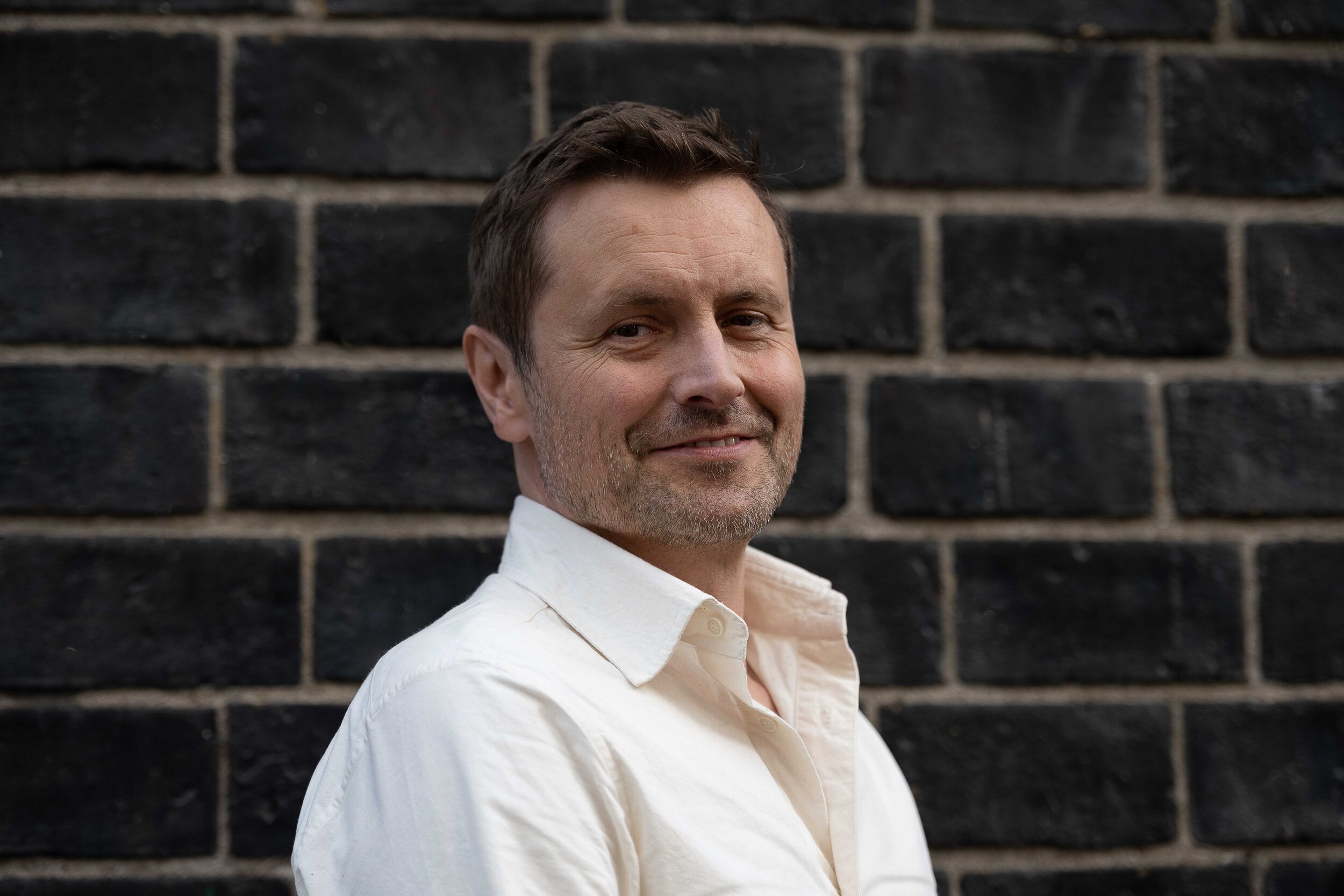

In this magazine we talk to Han Otten, Jorrit Kleijnen and Vidjay Beerenpoot about their works and experiences in the film industry.

In this chapter Han and Maurits discuss composing for different media and art forms such as film and modern dance: are there any differences? And when becomes music sound design or the other way around?

We watch a scene from the feature film Marionette and Han tells us about the use of microtonality in film music and how this affects the perception of the audience. Maurits Overdulve and Han discuss their collaboration for Marionette.

Another scene from the film Marionette tells us how to stretch violin players to their limits. Han and Maurits also discuss the use of temp track by directors and how to deal with this phenomenon being a film composer.
We watch a scene from the feature film Marionette and Han tells us about the use of microtonality in film music and how this affects the perception of the audience. Maurits Overdulve and Han discuss their collaboration for Marionette.

Alexa Rodrigues and Simon de Koning question Han about the peculiarities of being a film composer, having your own individual sound, the needed social skills, the collaboration with a director, the use of temp track, and much, much more
MORE MAIN COURSE

Despite corona Huba is full of new ideas and fascinations. In this last part of the interview she tells everything about her future projects.

Social media inspired Huba to create the opera Pulchachiajev, an opera with an unpronounceable title as Alexa shows in this part of the interview.
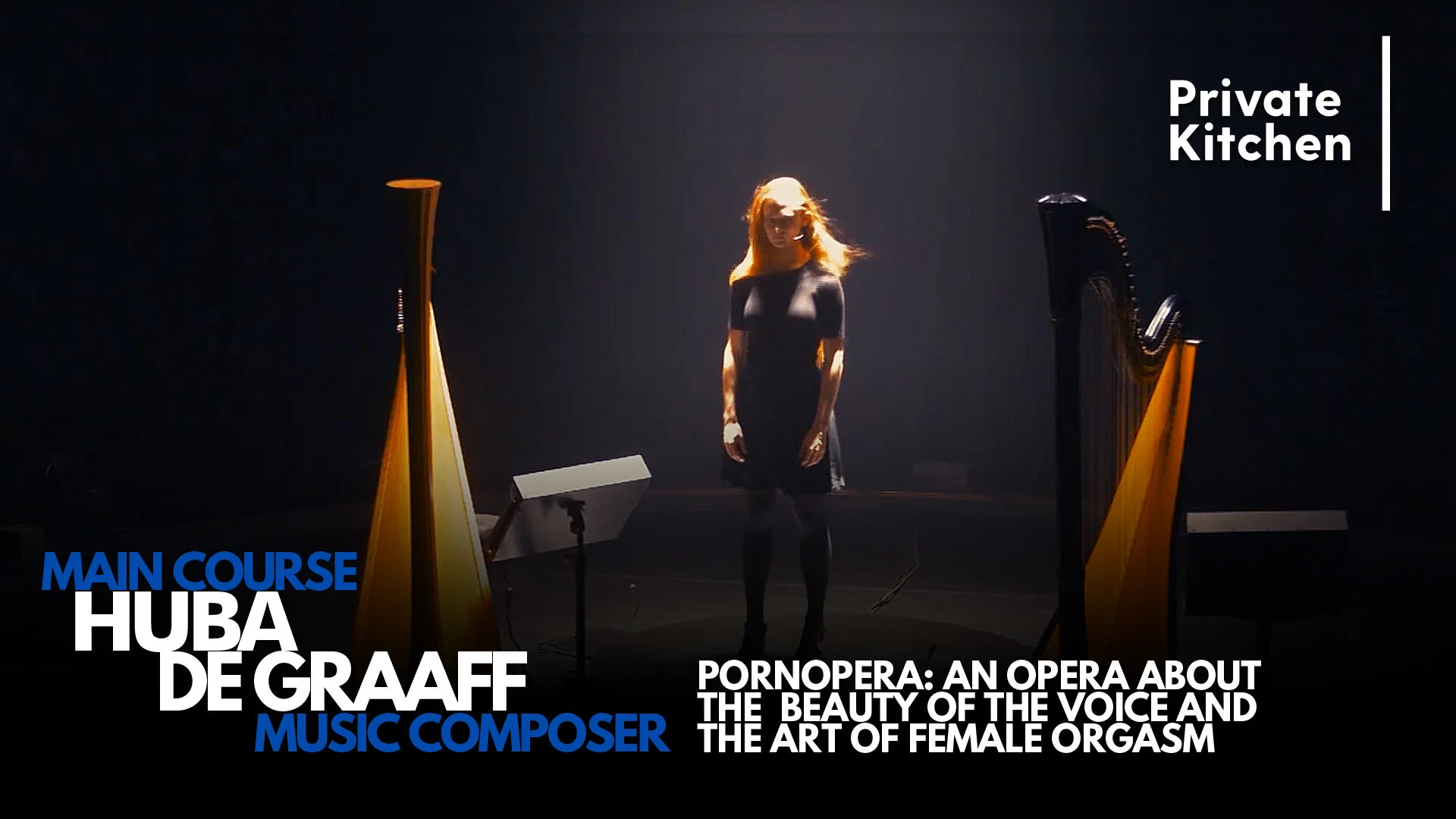
Another fascination of Huba is the voice so have a look at this part of the interview which is about the performance Pornopera and the use of the (female) voice.

Lautsprecher Arnolt, a performance with one actor and lots of ‘sound animals’, was an international success that was even performed in Teheran, Iran.

In this first part of the interview Huba tells us how she transforms her fascinations into ideas and concepts for music theatre performances.

Huba de Graaff is composer for theatre and takes an exceptional place in the landscape of contemporary music.

Future plans and collaborations with artists Eefje de Visser,Wende Snijders, fashion designer Iris van Herpen and the Venetian Biennale.

The impressive installation Between Mind and Matter. The importance of space (4DSOUND) in composing music for installations.

About managing expectations, collaboration and the concept and realisation of Resonance Room, an installation in Museum van de Geest.

Nick and Salvador tell detail about Anima, how to improve an already running interactive installation and all about the interactivity in Anima.

Nick and Salvador tell us their careers and collaboration started in ‘night life’ and explain becoming an ‘artist’ and ‘audio freak’.

Salvador Breed creates and sculpts sound and technology for a wide field of contexts like live performances, fashion shows, video art, and interactive art installations.
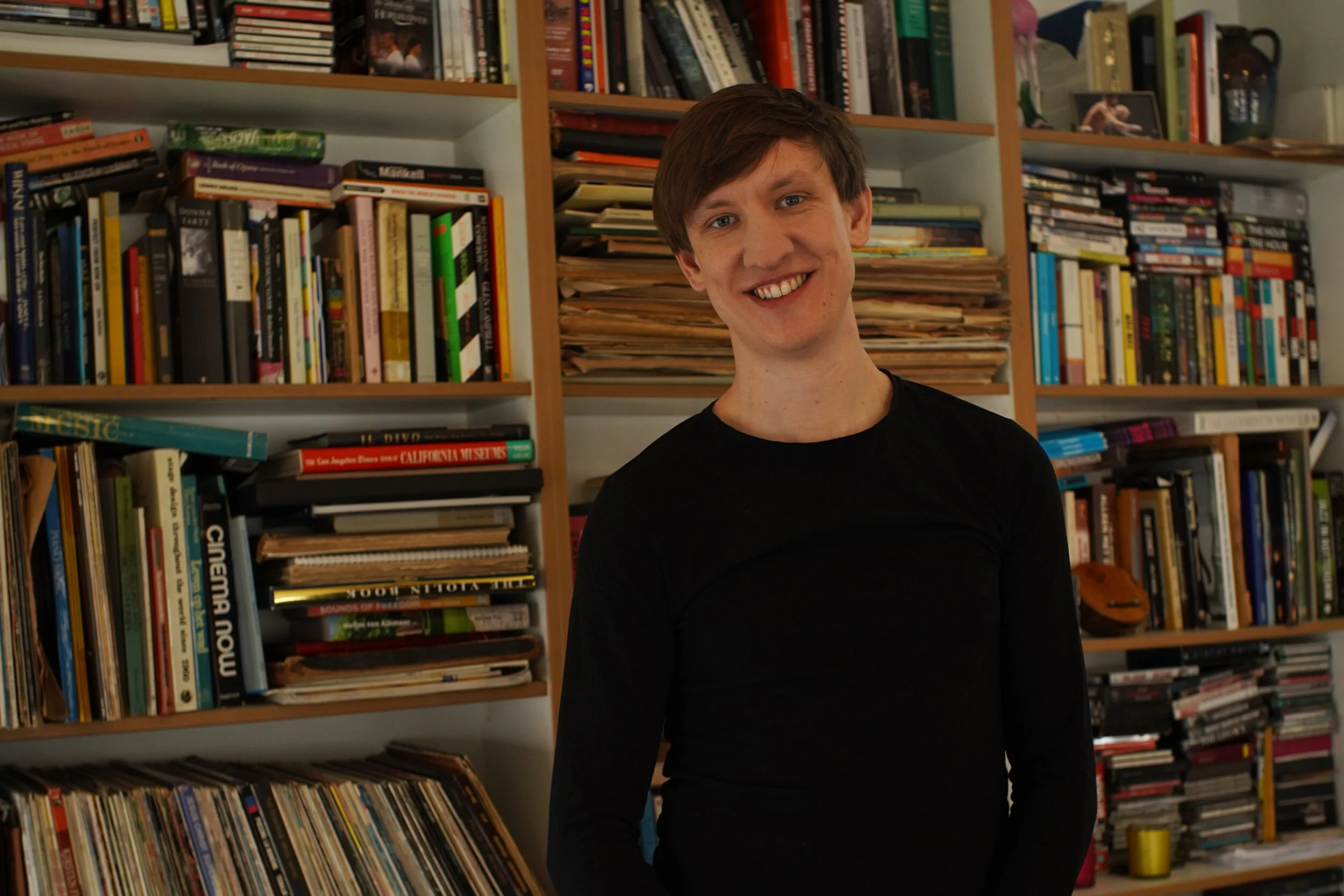
Nick Verstand is a contemporary artist researching human perception through spatial audiovisual compositions.
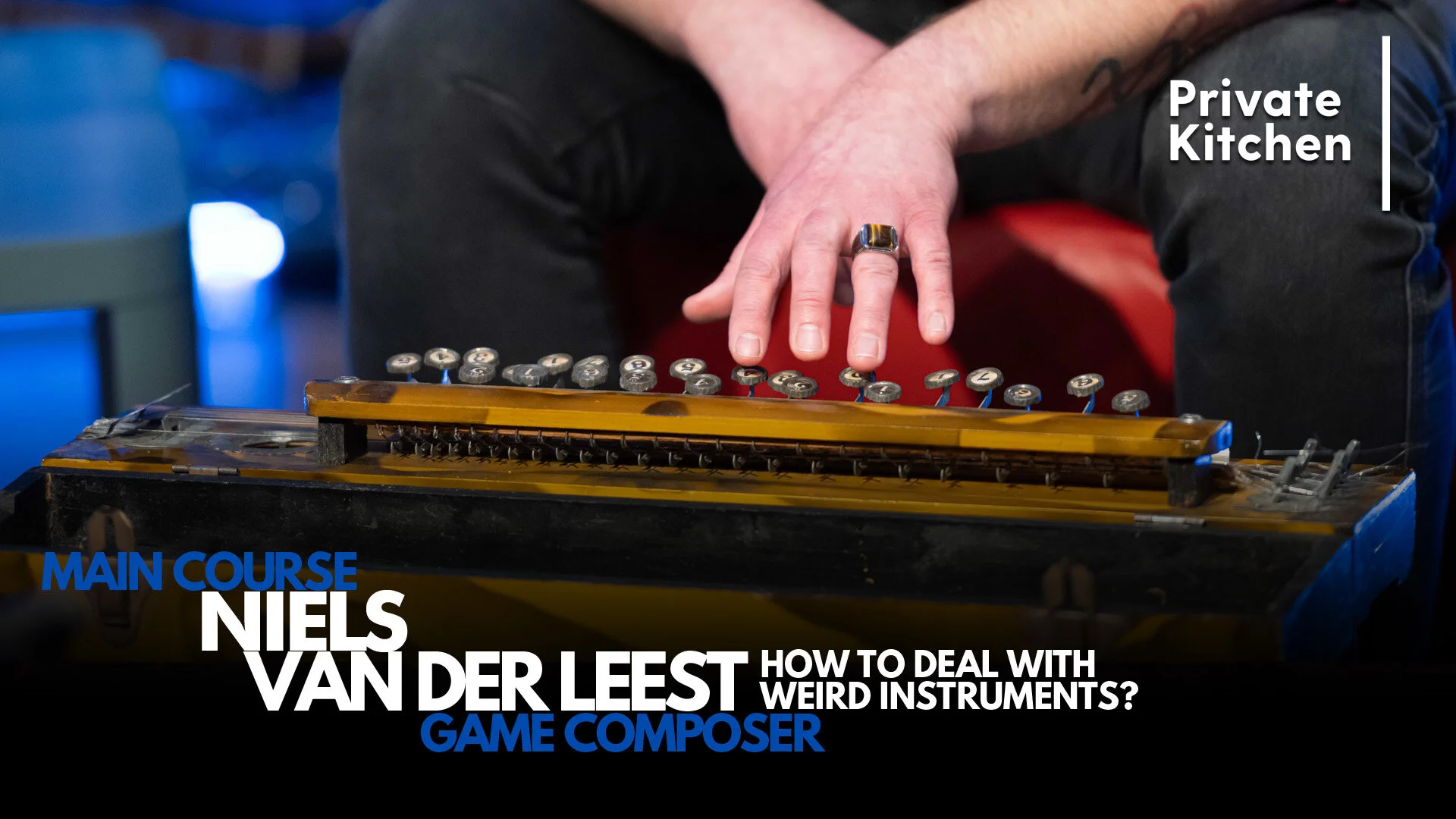
Niels demonstrates some of the instruments he used in the score for Horizon Zero Dawn and and he even had specific bow instruments designed to create specific soundscapes.

How Niels developed musical ideas for Horizon Zero Dawn and how to relate to the sound design in a game.

About the differences between composing for film and composing for games. And why three composers for Horizon Zero Dawn? How does that work?

How Horizon Zero Dawn changed the composition process of Niels and how do you record one of the largest drums on earth?

How Final Fantasy 7 transformed Niels into a first class game composer. And what NOT to do if you want to get into the game business.

Niels van der Leest is an award winning game composer and sound designer who has been in games since 2007. Over the course of the years he has worked with developers ranging from independent to AAA.

Stephen Emmer is an independent Dutch composer/arranger/artist and has collaborated with a variety of artists like Lou Reed, Chaka Khan and Patti Austin.


Stephen shares some ‘bullet points’ about starting a career in the music and media industry and reflects on rejects and the use of sound alikes.

Stephen Emmer and Carlo Delbosq reflect on their first meeting and the way they’ve collaborated throughout the years.

How to collaborate with famous artists such as Tony Visconti and Lou Reed and what about music in restaurants?

Stephen tells us how he started in music as a journalist. He talks about his approach and how his persistence eventually led to his current career in the music and media industry.
In this chapter Han and Maurits discuss composing for different media and art forms such as film and modern dance: are there any differences? And when becomes music sound design or the other way around?
We watch a scene from the feature film Marionette and Han tells us about the use of microtonality in film music and how this affects the perception of the audience. Maurits Overdulve and Han discuss their collaboration for Marionette.
Another scene from the film Marionette tells us how to stretch violin players to their limits. Han and Maurits also discuss the use of temp track by directors and how to deal with this phenomenon being a film composer.
We watch a scene from the feature film Marionette and Han tells us about the use of microtonality in film music and how this affects the perception of the audience. Maurits Overdulve and Han discuss their collaboration for Marionette.